The TH Hex Game
| The TH Hex Game | ||||||||||||||||||||
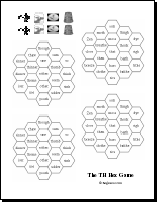
| That's "Hex" as in hexagon. This is a simple game that makes pronouncing the 'th' sound correctly a fun challenge. To prepare, just download the worksheet here and cut out the components. Cut around each (8 sum/thumb/cymbal/thimble slips and 4 hexagon cards) with right angles, leaving a little space. Each sheet has enough pieces for one pair of students. (Tip: If you use thicker paper, your pieces may last longer.) | ||||||||||||||||||||
|
||||||||||||||||||||
You may want to hand out the sum / thumb / cymbal / thimble slips and reinforce the words a little before the game. For example, "Show me the thimble!". |
||||||||||||||||||||
| Pair your students and pass out hexagon cards (and sum / thumb / cymbal / thimble slips, if you haven't already) to each. Notice that there are two variants of the cards. Both members of a given pair should receive the same card! It doesn't matter if two pairs receive different cards, but you might want to give the same to all to make life simpler. Before the paired activity begins, ask the entire class whether they can correctly pronounce the words on the hexagon cards, and help them with unknown words. If your students can read phonetic symbols, you may want to write the words phonetically and let them do the same on their cards. | ||||||||||||||||||||
|
||||||||||||||||||||
|
The game proceeds as follows: Without letting their partner watch, one of the pair places all four sum / thumb / cymbal / thimble slips onto hexagons on the hexagon card, choosing words that they think are challenging. They then tell their partner what to put where, and they should use the. For example, "Put the thimble on 'sinner'." Note that the words thumb and sum are on also on the hexagon cards, so you might hear "Put the thumb on 'thumb'.", "Put the thumb on 'sum'.", and so on. It's okay if they repeat their instructions, and it is in fact good if they do, because it suggests that they are paying closer attention to pronunciation. After all slips are in place, the students can put their cards side by side to compare. After this, they trade roles and the other partner dictates what to put where. Next time around, use the other hexagon cards. |
||||||||||||||||||||
|
||||||||||||||||||||
| |
||||||||||||||||||||
© Englicious.com |
||||||||||||||||||||